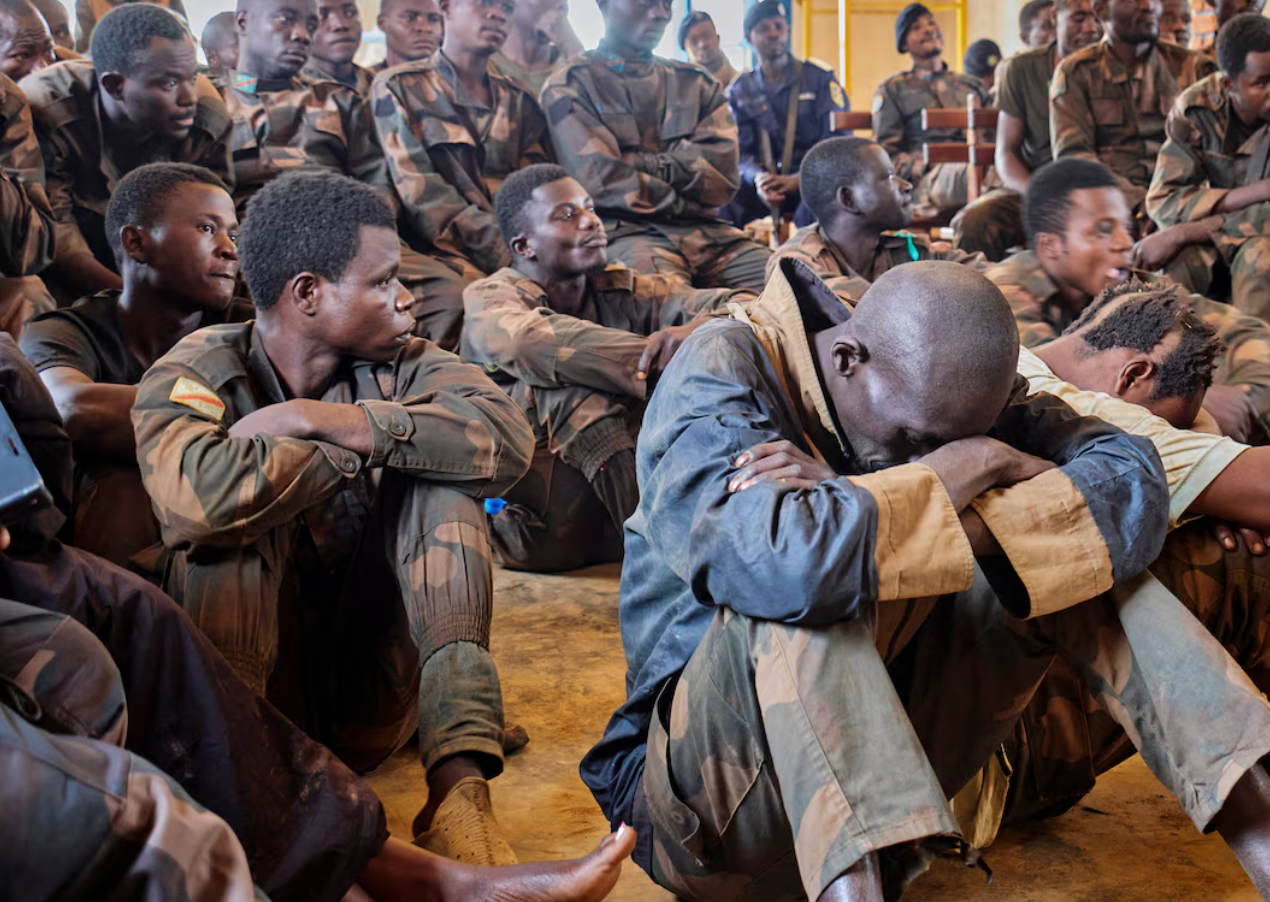
In a sombre moment for the Democratic Republic of Congo (DRC), a group of Congolese soldiers, dressed in a mix of fatigues and street clothes, stood trial last week for crimes ranging from rape to murder. These crimes were allegedly committed as they fled in the face of a lightning-fast rebel advance, underscoring the deepening dysfunction of the Congolese military. The soldiers’ trial comes as the army, already beleaguered by years of internal issues, has suffered a devastating blow in the eastern DRC, losing more territory than ever before to the Rwanda-backed M23 fighters.
The rapid desertion of the Congolese army has become a major issue, with over 300 soldiers standing trial in a series of quick-fire proceedings. The testimonies given during these court martial sessions reveal the chaotic state of the army, and highlight the widespread problems that continue to plague the force. These problems go far beyond the soldiers in the dock, with issues such as poor pay, corruption, and ineffective leadership making it difficult for the military to function effectively.
The testimony, combined with interviews from three senior army officers and a confidential United Nations (UN) memo obtained by Reuters, paints a grim picture of a military force that is struggling to maintain its cohesion and effectiveness in the face of mounting challenges. According to the sources, the army is hampered by entrenched issues that have gone unresolved despite numerous attempts at reform.
One of the key factors contributing to the army’s dysfunction is the poor pay and conditions faced by soldiers, which has led to widespread desertion and a lack of morale. The soldiers, who are often poorly equipped and underpaid, are leaving their posts in large numbers, unable to withstand the growing pressure from the M23 rebels. This desertion has left the army vulnerable, with its ranks depleted and its ability to defend territory weakened.
The situation has been exacerbated by the internal corruption within the army, which has further undermined its ability to fight effectively. Allegations of embezzlement, bribery, and mismanagement have led to a breakdown in the chain of command, leaving soldiers in the field with little support and few resources. The chaos has created an environment in which abuses are becoming more common, with civilians caught in the crossfire of both military failures and rebel offensives.
A confidential UN memo providing an update on the fighting warns that the army’s weak command structure raises significant risks of further abuses against civilians. With soldiers deserting or committing crimes as they flee the battlefield, there is a growing concern that the situation will spiral further out of control, leading to even greater suffering for the population.
This grim picture of the Congolese army comes at a time when the DRC faces a critical security crisis in the east. The M23 rebels, who are supported by Rwanda, have made significant territorial gains, and the Congolese military’s inability to hold these areas has led to mounting frustration both within the country and internationally. The loss of territory to a relatively small militia highlights the significant gap between the army’s capabilities and the challenges it faces.
In the wake of these trials and the continuing advances of rebel forces, the DRC’s military reform efforts remain inadequate. The failure to address the deep-rooted issues within the army has left it ill-equipped to deal with both internal and external threats, and the situation is only becoming more dire as the conflict continues.
The ongoing trials of soldiers for desertion and other crimes, while necessary, are only a small part of the broader picture. The real challenge lies in addressing the systemic issues within the Congolese military, which have undermined its effectiveness and contributed to the current crisis. As the DRC continues to grapple with the challenges posed by the M23 rebels and internal military dysfunction, the future of the country’s security and stability hangs in the balance. The need for comprehensive reform is more urgent than ever.
About The Author