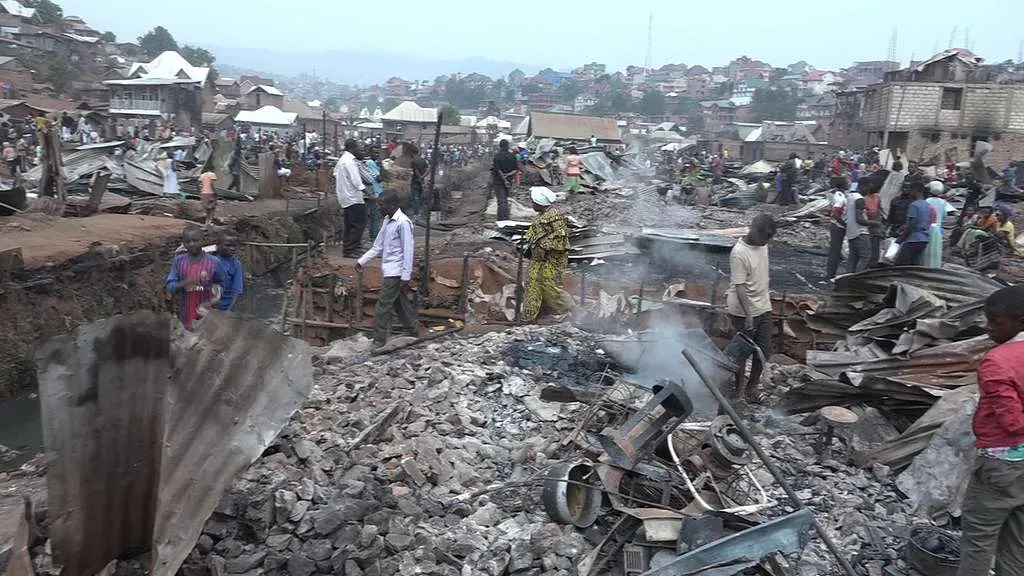
Bukavu, once a thriving city in the South Kivu province of the Democratic Republic of Congo (DRC), now stands in ruins after the M23 rebel group seized control, leaving behind a trail of devastation. Looters and armed groups have ravaged the city, plundering businesses, homes, and infrastructure, leaving its streets in chaos. The local population has been forced to flee or hide, as fear and uncertainty grip the region.
Despite the destruction, a small glimmer of hope remains as merchants and residents begin to return to their city. The return, however, is marked by resilience and a desperate cling to normalcy in the face of overwhelming adversity. People are slowly rebuilding, but the scars of war are deeply etched in the fabric of Bukavu. Shops are reopening amidst shattered windows and burned-out buildings, but the underlying fear that the violence could return at any moment looms large.
The M23 rebels, who have been advancing rapidly through eastern DRC, are not only causing a humanitarian crisis but also destabilising the region. Bukavu, a key urban centre, is strategically important, and its fall has raised alarms about the potential for further escalation in the conflict. The takeover by M23, coupled with the ongoing involvement of foreign forces, including Rwanda, has further complicated efforts for peace.
As rebel forces continue to push southward, many worry that the worst is yet to come. Will peace hold, or will this be the beginning of an even more intense battle for control over South Kivu? The uncertainty surrounding the future of the region has left local communities in a state of paralysis, struggling to rebuild their lives while facing the looming threat of more violence.
International calls for intervention and peace negotiations are growing, but for now, the people of Bukavu and South Kivu are left to pick up the pieces in an increasingly unstable environment. As the M23 rebels continue to tighten their grip, the path to peace remains unclear, and the future of the region hangs in the balance.