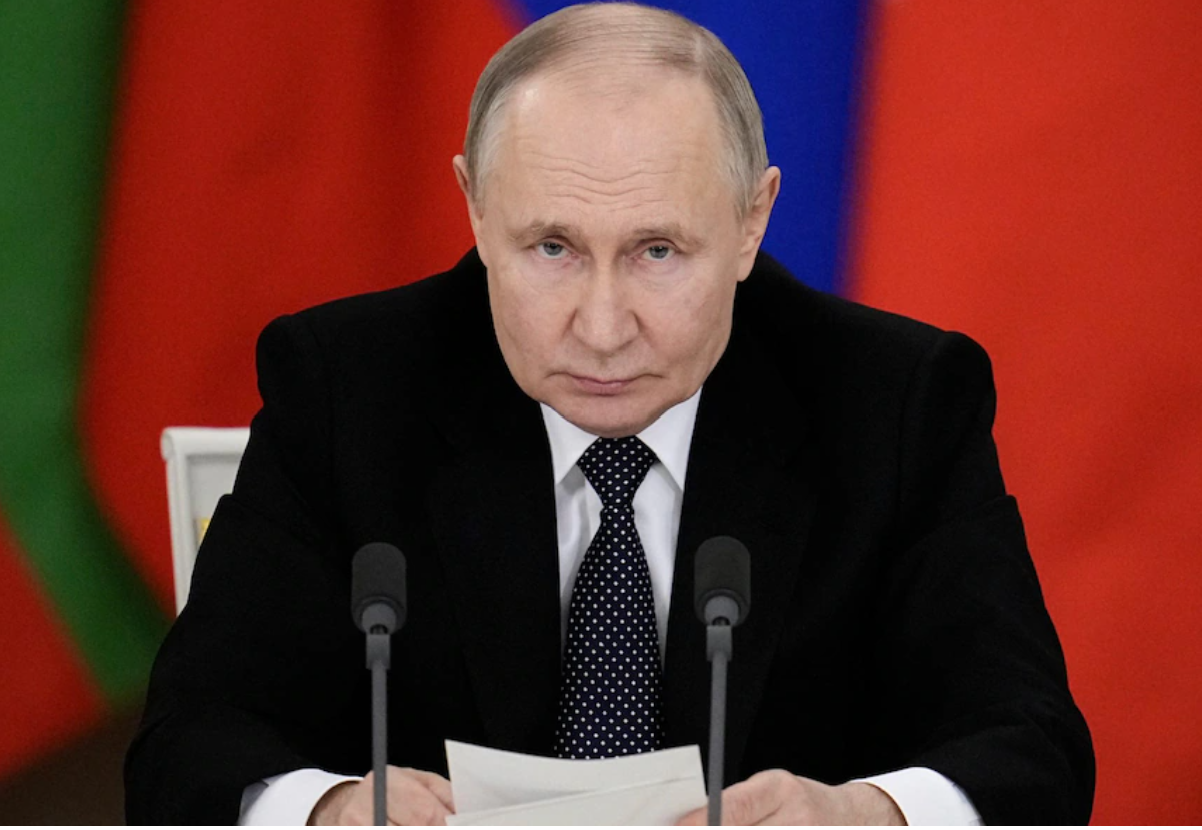
In a sharp response to French President Emmanuel Macron’s recent comments about nuclear deterrence and his plan to protect Ukraine and European allies, Russian President Vladimir Putin has launched an aggressive rhetorical attack, accusing Macron of forgetting the lessons of history. Putin’s remarks, made during a press conference, compare the French leader to Napoleon Bonaparte, hinting that like the French emperor, Macron might suffer the same fate in his pursuit of power and influence.
Macron had recently outlined France’s position on nuclear deterrence, emphasising the importance of protecting European allies, including Ukraine, amid Russia’s ongoing military aggression. His comments came after escalating tensions between Russia and NATO, particularly over the war in Ukraine, where Macron has advocated for stronger collective security measures and has consistently urged a united European front. Macron’s commitment to ensuring the safety of Europe has been met with admiration by some and fierce criticism from others, including Russian officials.
Putin’s Comparison to Napoleon
In his comments, Putin accused Macron of not fully understanding the consequences of his actions, referencing Napoleon’s failed military campaigns and eventual downfall. “Macron has forgotten what happened to Napoleon. History has a way of repeating itself,” Putin stated, implying that Macron’s ambitious rhetoric on nuclear deterrence could lead to his own political demise, much as Napoleon’s imperial dreams ended in disaster.
The comparison to Napoleon, a figure synonymous with imperial expansion and military conquest, is a clear attempt to paint Macron as someone overstepping his bounds and risking the wrath of history. Putin has frequently invoked historical references to justify his actions, particularly when positioning himself as a defender of Russia’s sovereignty and a challenger to Western powers.
Putin’s remarks reflect the growing tension between Russia and the West, particularly France, which has been vocal in its support for Ukraine in the face of Russia’s invasion. Macron has often been a key advocate for diplomatic solutions but has also made it clear that France is prepared to protect its interests and those of its allies, especially when it comes to nuclear deterrence.
Nuclear Threats and Escalating Tensions
Macron’s comments on nuclear protection were made in the context of Europe’s growing security concerns in light of Russia’s actions in Ukraine and the broader threat posed by Russian military aggression. The French President has long argued that Europe must maintain a robust deterrent capability in the face of Russian threats, including the use of nuclear weapons as a last resort. His statements have stirred controversy, particularly among those who fear the potential escalation of the conflict into a larger nuclear confrontation.
Russia, for its part, has not shied away from invoking the possibility of nuclear escalation in its ongoing war with Ukraine, and Putin has repeatedly made veiled threats regarding the use of Russia’s nuclear arsenal. Macron’s recent comments on nuclear protection were seen by some as a direct response to these threats, emphasising France’s readiness to defend itself and its allies, no matter the stakes.
The nuclear rhetoric on both sides is contributing to a dangerous escalation in the geopolitical landscape, with many Western leaders calling for restraint while also reiterating their commitment to Ukraine’s defence. Meanwhile, Russia continues to highlight the historical tensions between East and West, seeking to solidify its position as a global power.
Russian Foreign Minister’s Critique of Macron
In a more direct attack, Russian Foreign Minister Sergey Lavrov also weighed in on Macron’s comments, drawing an even more inflammatory comparison between the French President and Adolf Hitler. Lavrov accused Macron of pursuing policies that could lead to war and described his actions as echoing the aggressive expansionism seen during the Second World War. This comparison with Hitler is particularly potent, as it plays into Russia’s narrative that it is fighting a defensive war against the West, positioning itself as a protector of traditional values and national sovereignty.
Lavrov’s remarks come amid growing frustration within the Russian government over the European Union’s continued support for Ukraine, and the broader stance taken by NATO and its allies. As the conflict in Ukraine drags on, Russia has become increasingly isolated on the world stage, and its leaders are looking for ways to justify their actions while rallying domestic support.
The Political Fallout
The political fallout from these remarks is significant, both within Europe and internationally. Macron’s response to Putin’s claims will likely be a focal point in the coming weeks, as the French President continues to navigate the delicate balance between diplomacy and military deterrence. In France, Macron’s stance on Ukraine and his commitment to nuclear deterrence are popular among those who see him as a leader standing firm against Russian aggression, but they also risk alienating more pacifist factions within his country and across Europe.
For Putin, the rhetoric about nuclear threats and historical comparisons serves to rally domestic support in Russia, portraying him as a defender of the nation against foreign aggressors. However, it also risks further alienating Russia from the West and exacerbating the ongoing war of words, which could fuel even greater tensions in the international community.
About The Author