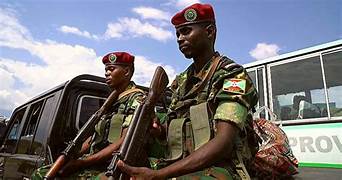
The most recent crisis in eastern Congo has brought to light long-standing flaws in the military, which has a history of brutality, extortion, and corruption.
Why Congo’s Vast Army Is Struggling to Fight a Far Smaller Militia
The most recent violence in the eastern Democratic Republic of the Congo (DRC) has brought to light the military’s long-standing flaws, as it has been unable to effectively fight armed groups, especially smaller militias, for years. The DRC has one of the biggest militaries in Africa, but it hasn’t been able to win major battles against the region’s much smaller and frequently better-equipped militias. In addition to revealing the internal dysfunctions of the military, this protracted fight highlights broader problems with governance, corruption, and poor management that continue to threaten the nation’s security services.
A Military Struggling with Corruption and Mismanagement
Corruption, bad leadership, and a lack of proper training and funding have long been problems for the Armed Forces of the Democratic Republic of Congo (FARDC), the country’s army. Despite having one of the biggest standing militaries on the continent, the nation frequently struggles with unity issues, ineffective command systems, and a general inability to mobilise its soldiers. Because of these structural issues, despite the army’s size, it frequently lacks the capabilities of smaller, better-organized militias that are better able to take advantage of the terrain and function in a highly adaptable, guerrilla-style fashion.
Widespread corruption is one of the FARDC’s main problems. Poor discipline and low morale throughout the ranks result from soldiers frequently receiving their pay cheques late or not at all. Instead than concentrating on their military goals, soldiers have occasionally been known to extort locals or plunder while on duty. In addition to harming the army’s image, this increases civilian mistrust and anger, which makes it harder for the military to hold onto territory it has supposedly “secured.”
Lack of Equipment and Training
The FARDC faces significant challenges due to its antiquated and insufficient military hardware. The Congolese military frequently suffers from inadequate supplies, antiquated technology, and badly maintained weapons despite receiving foreign assistance and support. Because of this, they find it challenging to combat militias that possess more advanced weapons, frequently obtained from illicit arms markets or even nearby nations.
Furthermore, the FARDC lacks enough training in contemporary combat techniques, which puts it at a serious disadvantage when dealing with militia organisations that are nimble and familiar with the local terrain. The FARDC is ill-prepared to combat the unconventional warfare techniques used by militias, which frequently have fewer resources. These tactics include ambushes, hit-and-run attacks, and the use of improvised explosive devices (IEDs).
The Eastern Democratic Republic’s Military Role
Militant activity has long been prevalent in the eastern Democratic Republic of Congo, especially in the provinces of North Kivu and South Kivu. Despite the presence of FARDC forces, organisations like the M23, the Allied Democratic Forces (ADF), and numerous local militias have managed to hold onto control over substantial areas of land. These militias frequently possess extensive knowledge of the local environment, which they exploit by integrating with communities, making it more difficult for the military to locate and successfully target them.
Some of these militias also receive assistance from outside sources; it has been reported that specific organisations may receive military and logistical help from nearby nations like Rwanda and Uganda. The position for the FARDC is made more difficult by the fact that it must contend with both local militias and regional geopolitical interests that threaten its capacity to stabilise the area.
The Failure of Government and Military Reform
The DRC administration has long promised to address the numerous problems facing the FARDC and reform its military. Nevertheless, there hasn’t been much noticeable advancement in the areas of structural change, improved training, and corruption eradication in spite of these assurances. These systemic issues have persisted because of the army’s leadership structure’s lack of accountability, which has hindered the military’s capacity to become a more effective force that can handle the security threats posed by militias.
In addition, the DRC’s leadership has had difficulty bringing the people together and promoting national unity, both of which are essential for bolstering the state and military establishments. Locals frequently turn to militias for security rather than the government forces, which has contributed to the continuous instability caused by the army’s inability to establish confidence with the civilian population.
International Support and the Path Forward
International partners, including the United Nations and neighbouring countries, have continued to support the DRC’s efforts to strengthen its military and security forces. However, this external support has had limited success in addressing the root causes of the military’s weaknesses. The DRC remains dependent on foreign military aid, yet the country’s long-standing issues of governance and corruption continue to undermine these efforts.
For the FARDC to become an effective fighting force, comprehensive military reform is essential, including better pay and conditions for soldiers, improved training programmes, and a crackdown on corruption within the ranks. However, reforming the military will require broader changes within the country’s political system, addressing corruption and weak governance at all levels. Only then can the DRC hope to establish a security force that is capable of providing lasting peace and stability for its citizens.