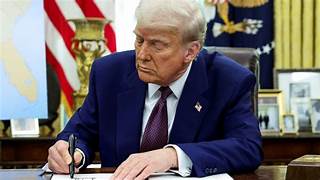
Former US President Donald Trump has caused a stir on the international stage by calling for Russia’s return to the Group of Seven (G7) nations, a proposal that challenges the longstanding isolation of Russia from Western diplomatic circles. Trump’s call for Russia to rejoin the G7 has ignited a passionate debate about the best approach to managing relations with Moscow, particularly as the war in Ukraine continues to put enormous strain on international relations.
Trump’s comments came during a recent interview in which he argued that reintegrating Russia into the G7 would encourage constructive dialogue and prevent further conflict. His position reflects his broader foreign policy philosophy, which often emphasises direct engagement with adversaries as a means of reducing tensions and finding pragmatic solutions.
However, Trump’s proposal has been met with strong opposition from many European leaders and NATO officials. In particular, a European defence minister has warned that NATO is currently facing its “darkest times” since the end of World War II, as the alliance grapples with Russia’s military aggression in Ukraine and the growing threat of escalation. The minister’s comments reflect the deep concerns within Europe about the security risks posed by Russia and the challenges NATO faces in maintaining unity and effectiveness in the face of such threats.
Trump’s call for Russia’s reintegration into the G7 is a stark contrast to the prevailing diplomatic consensus, which has largely sought to isolate Russia through sanctions and diplomatic pressure. As the geopolitical landscape continues to shift, it remains to be seen whether Trump’s vision will gain traction, or if the West will continue to pursue a policy of resistance in response to Russia’s actions.
About The Author